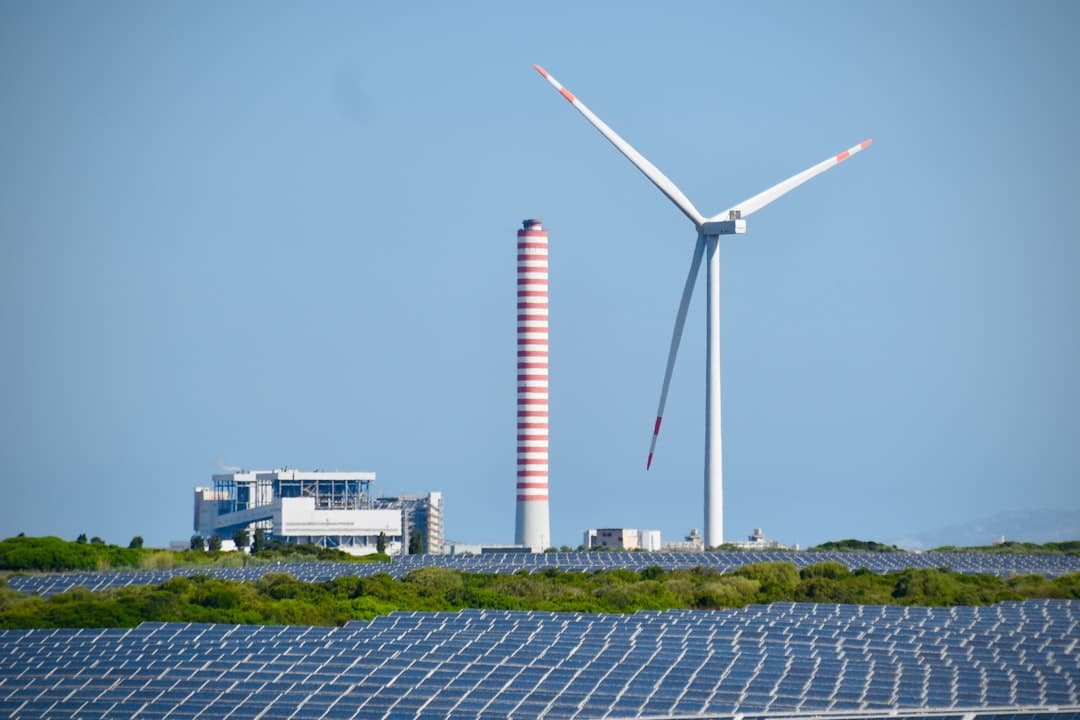
Artificial intelligence is transforming how energy companies generate, distribute, and consume power. Rather than replacing human decision-making, AI systems analyze vast amounts of operational data to identify patterns, predict problems before they occur, and optimize complex systems that would be impossible to manage manually. From wind farms to power grids to solar installations, AI is becoming essential infrastructure for modern energy operations.
Key Points
- AI helps energy companies predict equipment failures before they happen, reducing unexpected outages and maintenance costs
- Machine learning algorithms optimize power generation from renewable sources by forecasting weather patterns and adjusting output accordingly
- AI systems manage electricity grids in real-time, balancing supply and demand across thousands of interconnected devices
- Utilities use AI to detect anomalies in energy consumption patterns, identifying theft, waste, and efficiency opportunities
- AI enables better long-term planning by analyzing historical data and modeling future energy demand scenarios
Understanding AI in Energy
The energy sector faces a fundamental challenge: it must balance supply and demand instantaneously across complex networks while managing increasingly variable renewable sources. Traditional rule-based systems and human operators struggle with this complexity. AI addresses this by processing real-time data from thousands of sensors, historical patterns, and external variables (like weather forecasts) to make rapid, data-driven decisions.
AI in energy isn't a single technology—it encompasses several approaches. Machine learning algorithms learn patterns from historical data without being explicitly programmed for each scenario. Deep learning systems, a subset of machine learning, can identify subtle patterns in massive datasets. Reinforcement learning allows systems to improve through trial and feedback. Each approach serves different purposes across the energy value chain.
The adoption of AI in energy has accelerated as three conditions converged: the proliferation of smart meters and sensors generating continuous operational data, the computational power to process that data affordably, and the business case for optimization as energy margins tightened and renewable integration increased.
How It Works
1. Predictive Maintenance
AI systems monitor equipment like turbines, transformers, and generators by analyzing sensor data for vibration patterns, temperature changes, and electrical signatures. When these patterns deviate from normal operating conditions, the system alerts maintenance teams before failure occurs. This prevents costly emergency repairs and unplanned outages. Rather than replacing equipment on a fixed schedule, operators can maintain it precisely when needed.
2. Renewable Energy Forecasting
Wind and solar generation depends on weather conditions that change constantly. AI models analyze historical weather patterns, current atmospheric conditions, and solar irradiance data to forecast generation output hours or days in advance. Utilities use these forecasts to plan which backup generation sources to activate, reducing the need for expensive reserve capacity and improving grid stability.
3. Grid Optimization and Demand Response
Power grids must balance supply and demand in real-time. AI systems monitor consumption patterns across millions of customers and adjust distribution in milliseconds. They can also coordinate demand response programs—automatically adjusting flexible loads like water heaters or EV charging stations when grid stress is detected—without requiring customer intervention.
4. Anomaly Detection
AI systems establish baseline patterns for normal energy consumption and operations. When actual data deviates significantly from these baselines, the system flags anomalies. This identifies non-technical losses (theft), equipment malfunctions, and efficiency opportunities that human analysts might miss.
5. Energy Demand Forecasting
Utilities must plan generation capacity years in advance. AI models analyze historical consumption data, economic indicators, weather patterns, and demographic trends to forecast future demand with greater accuracy than traditional methods. This improves investment decisions and reduces the risk of over- or under-building capacity.
Why It Matters
The energy sector operates on thin margins with massive infrastructure investments. Small efficiency improvements compound across millions of customers and thousands of assets. AI enables these improvements by automating optimization at scales humans cannot manage. A utility managing a grid with millions of connected devices cannot optimize each interaction manually—AI makes this possible.
The transition to renewable energy creates new operational challenges. Wind and solar generation is variable and weather-dependent, making the grid harder to balance. AI forecasting and real-time optimization are becoming essential tools for integrating renewables reliably. Without AI, higher renewable penetration would require proportionally larger backup capacity, increasing system costs. With AI, utilities can operate efficiently with higher renewable percentages.
Beyond operations, AI improves planning and investment decisions. Energy companies can model scenarios more thoroughly, understand customer behavior more precisely, and identify emerging trends earlier. This translates to better capital allocation and more resilient energy systems.
Related Terms
- Machine Learning: A subset of AI where systems improve their performance by learning from data rather than following pre-programmed rules
- Smart Grid: An electrical grid that uses digital technology and sensors to monitor and optimize power flow in real-time
- Demand Response: Programs that adjust customer electricity consumption in response to grid conditions or pricing signals
- Predictive Analytics: Using historical data and statistical models to forecast future outcomes
- Edge Computing: Processing data locally on devices rather than sending it to centralized servers, enabling faster AI decisions
Frequently Asked Questions
Does AI replace energy workers?
AI automates routine monitoring and optimization tasks, but it doesn't eliminate the need for skilled workers. Instead, it shifts roles—technicians focus on responding to AI-identified problems rather than manually monitoring systems, and engineers focus on strategy rather than routine calculations. The energy sector continues to need operators, maintenance technicians, engineers, and planners.
How accurate are AI forecasts for renewable energy?
AI forecasting accuracy depends on the timeframe and local conditions. Hour-ahead forecasts are typically quite accurate, while day-ahead forecasts are less precise. Accuracy improves with more historical data and better sensor networks. Most utilities find AI forecasts significantly more accurate than traditional methods, though no forecast is perfect.
What data does AI need to work effectively in energy?
AI systems require continuous operational data from sensors and meters, historical performance records, weather data, and information about grid topology and equipment specifications. More granular data generally improves AI performance, but utilities must balance data collection costs against the value of improved optimization.
Is AI secure in critical energy infrastructure?
Security is a legitimate concern since energy systems are critical infrastructure. AI systems are subject to the same cybersecurity standards as other grid technologies. The main risks involve data poisoning (feeding AI systems false data) and model manipulation. Utilities address these through network security, data validation, and regular system audits.
Last updated: April 6, 2026. For the latest energy news and analysis, visit energystandard.io.