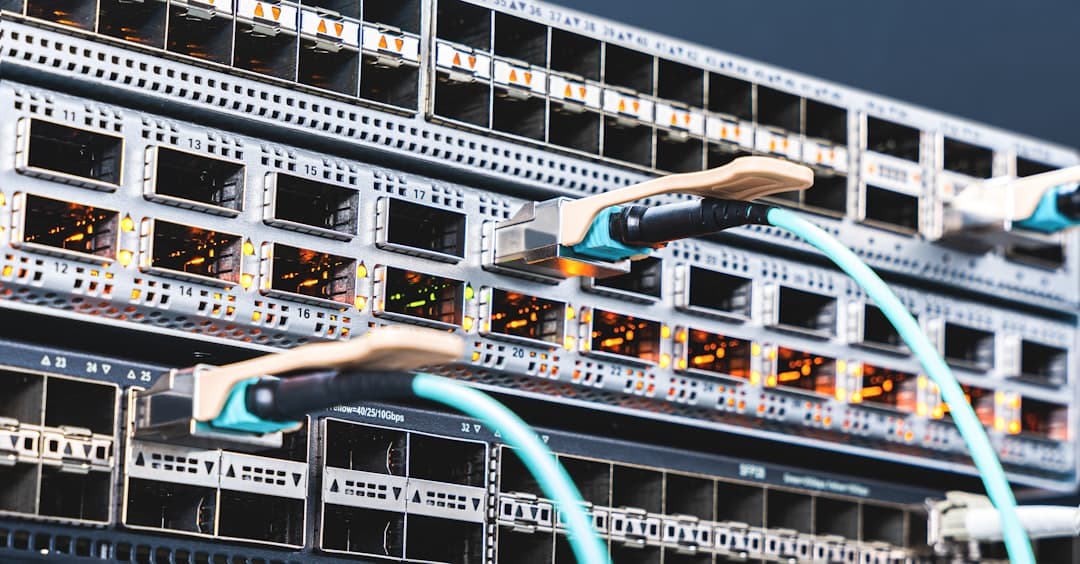
Data centers are among the most energy-intensive facilities in the modern economy. They require continuous electricity to operate computing equipment, storage systems, and—critically—cooling infrastructure that prevents servers from overheating. The amount of energy a data center consumes depends on its size, the type of workloads it handles, and how efficiently it's designed and operated.
Key Points
- Data centers require power for both computing equipment and extensive cooling systems
- Energy consumption varies dramatically based on facility design, location, and operational efficiency
- Power Usage Effectiveness (PUE) is the standard metric for measuring data center efficiency
- Cooling accounts for a substantial portion of total energy consumption in most facilities
- Data center energy demand continues to grow as digital services expand globally
Understanding Data Center Energy Consumption
Data centers are facilities that house thousands of servers—the computers that store data and run the applications and services we use daily. When you stream a video, send an email, or access cloud storage, those requests are processed by servers in data centers somewhere in the world.
Every server generates heat as electricity flows through its processors and components. Unlike a personal computer that can dissipate heat into a room, data centers pack thousands of servers into dense configurations. This concentration of computing power creates an enormous heat management challenge. Without active cooling, servers would quickly overheat and fail.
This is why data centers require two major energy inputs: power for the actual computing equipment, and power for the cooling systems that remove the heat those computers generate. In many data centers, cooling consumes nearly as much energy as the servers themselves—sometimes even more.
The energy intensity of data centers also depends on what they're doing. A data center running artificial intelligence workloads, which require intensive mathematical calculations, consumes more power per unit of computing than one handling simple data storage and retrieval. Similarly, data centers in hot climates require more aggressive cooling than those in cooler regions.
How It Works
Understanding data center energy consumption requires looking at the major energy demands:
Server Computing Power: The processors, memory, and storage devices that perform actual computational work consume the baseline electricity. This varies based on utilization—a server running at full capacity uses more power than one running at partial load.
Cooling Systems: Air conditioning, liquid cooling systems, and ventilation infrastructure remove heat from the facility. These systems must operate continuously, even when servers are running at partial capacity, because the facility itself must maintain proper temperature ranges.
Power Distribution and Conversion: Electricity must be converted from the grid's voltage to the specific voltages needed by servers, and distributed throughout the facility. This conversion process loses some energy as heat.
Auxiliary Systems: Lighting, security systems, fire suppression, and other facility operations add to total consumption.
The efficiency of these systems is measured using a metric called Power Usage Effectiveness (PUE). PUE is calculated by dividing total facility power consumption by the power consumed by computing equipment alone. A PUE of 2.0 means that for every unit of power used by servers, an additional unit is used for cooling and other infrastructure. Modern efficient data centers achieve PUE values closer to 1.2 or 1.3, meaning they've reduced overhead significantly through better cooling design, free cooling from outside air, and optimized operations.
Why It Matters
Data center energy consumption matters for several interconnected reasons. First, it represents a substantial portion of global electricity demand. As digital services become more central to business and daily life—cloud computing, streaming services, social media, artificial intelligence—the energy demands of data centers continue to grow.
Second, data center energy consumption has environmental implications. The electricity powering these facilities comes from various sources, and in regions relying on fossil fuels, data center growth directly increases carbon emissions. This has prompted major technology companies to invest in renewable energy and to locate data centers in cooler climates where cooling costs are lower. Some companies have committed to powering their data centers entirely with renewable energy, which requires significant investment in wind and solar infrastructure.
Third, energy costs are a major operational expense for data center operators. A facility running inefficiently wastes money and resources. This economic pressure has driven continuous innovation in cooling technology, server design, and facility management. Operators have strong financial incentives to reduce PUE and improve efficiency.
Related Terms
Power Usage Effectiveness (PUE): A metric measuring data center efficiency by comparing total facility power consumption to computing equipment power consumption alone.
Thermal Management: The process of removing heat from computing equipment to maintain safe operating temperatures.
Server Utilization: The percentage of a server's computing capacity actually being used at any given time; higher utilization generally means better energy efficiency per unit of work performed.
Free Cooling: A technique using outside air or water to cool data centers, reducing reliance on energy-intensive air conditioning systems.
Frequently Asked Questions
Why do data centers need so much cooling?
Servers generate intense heat in a small space. A single rack of servers can generate as much heat as a small house. Without active cooling, temperatures would rise to levels that damage or destroy equipment within minutes. Cooling systems must operate continuously to maintain safe operating temperatures, typically between 64-80°F (18-27°C).
Can data centers use renewable energy?
Yes. Many data centers are increasingly powered by renewable energy sources like wind and solar. Some operators have built dedicated renewable energy facilities or purchased power from renewable sources through long-term contracts. However, renewable energy availability varies by location, which influences where new data centers are built.
What's the difference between air cooling and liquid cooling?
Traditional data centers use air conditioning to cool the facility. Newer facilities increasingly use liquid cooling systems where coolant circulates directly through or near servers, removing heat more efficiently. Liquid cooling can achieve better efficiency but requires more sophisticated engineering and maintenance.
How has data center efficiency improved?
Efficiency has improved through better cooling design (including free cooling from outside air), more efficient power supplies, optimized server configurations, and better facility management. Modern data centers can achieve PUE values significantly lower than older facilities, meaning less wasted energy per unit of computing work performed.
Last updated: April 4, 2026. For the latest energy news and analysis, visit energystandard.io.